
The 2026 ADA Web Rule: Is Your Educational Video Content Compliant?
Introduction
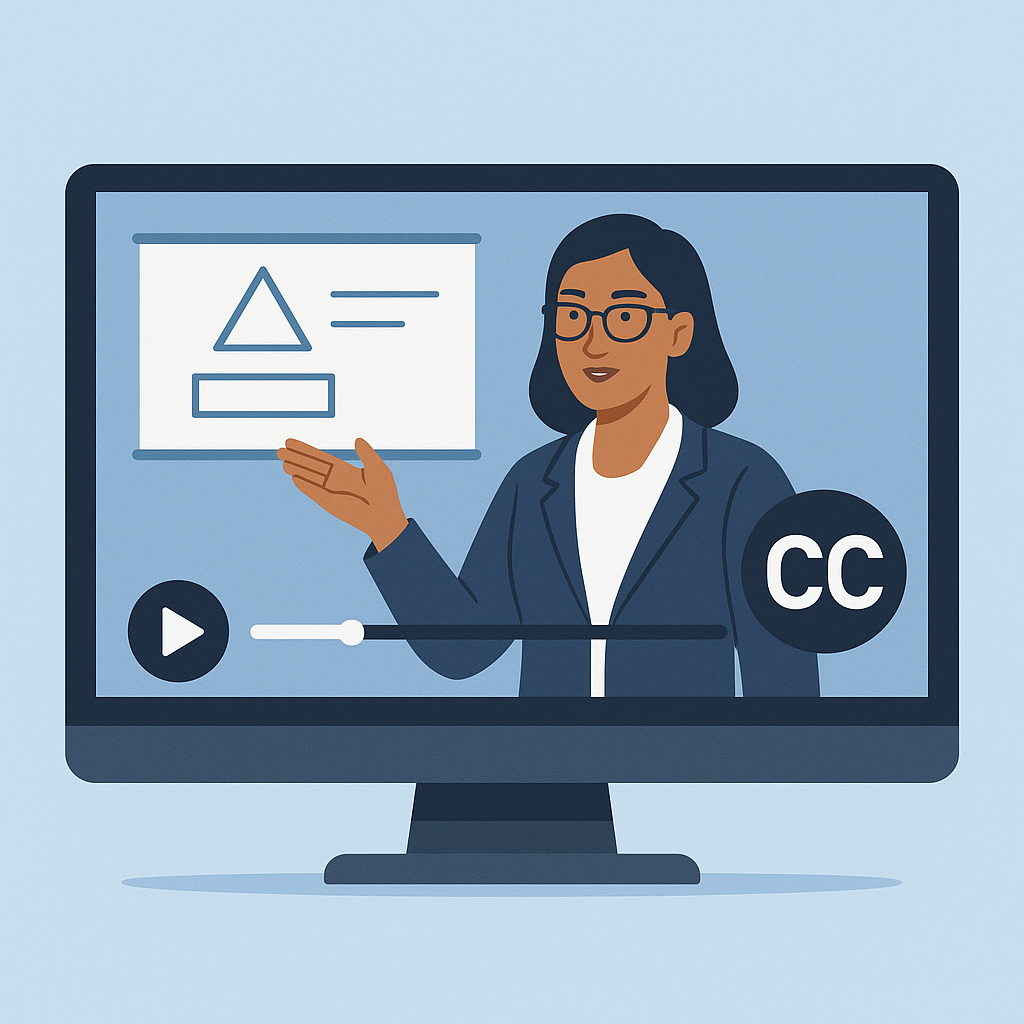
Starting April 2026, public schools, community colleges, and public universities must meet stringent new requirements for web and mobile application accessibility. Is your organization ready? Institutions with over 50,000 students will face the biggest shift in digital accessibility this decade: a stringent new rule from the Department of Justice that mandates Web Content Accessibility Guidelines (WCAG) 2.1, Level AA compliance for all digital content.
The Department of Justice’s final rule updates Title II of the Americans with Disabilities Act (ADA), setting the technical standard at Web Content Accessibility Guidelines (WCAG) Version 2.1, Level AA. This mandate covers all digital content, including text, documents, images, sound, and, critically, videos.
For educators and administrators, this rule means the clock is ticking to audit and remediate every piece of non-compliant content. The most significant hurdle? The sheer volume of embedded videos from third-party platforms like YouTube and Vimeo, many of which are likely non-compliant due to inaccurate auto-captions or hidden accessibility issues. Auditing this immense volume of content requires a targeted strategy to guarantee equal access and mitigate institutional legal risk.
The New Mandate: WCAG 2.1 AA
The new rule, published in April 2024, establishes WCAG 2.1, Level AA as the baseline standard for digital accessibility for state and local governments.
Compliance Deadlines:
- April 24, 2026: For governments serving a population of 50,000 or more persons.
- April 26, 2027: For smaller governments (0 to 49,999 persons) and special district governments.
The rule is specific: web content, including videos, must meet WCAG 2.1 Level AA guidelines. For video, this means providing high-quality, accurate captions and, in some cases, audio descriptions to ensure accessibility for individuals with hearing or visual disabilities. This applies to any content a state or local government provides or makes available, even if it’s provided by a third party on their behalf.
Importance and Impact - The Video Accessibility Crisis for Educators
The transition to digital learning has led to the proliferation of embedded video content across learning management systems (LMS), course pages, and faculty websites. While YouTube and Vimeo are invaluable educational resources, they pose a compliance risk:
- Inaccurate Auto-Captioning: Many embedded videos rely on YouTube or Vimeo’s automated closed captions (CC). These auto-generated captions typically provide only 60% to 70% accuracy. This is a major compliance risk because the WCAG 2.1 Level AA standard requires captions to have 99% accuracy or better for pre-recorded media. Crucially, if an educator does not own the original video, YouTube does not allow them to edit or correct the auto-generated captions on the embedded content. This leaves non-compliant material permanently exposed on the institution's digital platforms.
- Hidden Accessibility Tools: Uploading captions is only part of the job. When videos are sourced from platforms that do not provide a purpose-built, accessible LTI tool inside the LMS, the embedded player can become a problem. They may lack reliable keyboard navigation, provide poor focus control, or expose controls that screen readers cannot reach when iframed within an LMS. The result is a video that looks fine on the page but remains unusable for students who rely on assistive technology.
The reality is that educators are now responsible for auditing thousands of existing video links. Manually checking every single third-party video across an entire institution's digital content footprint is a tedious and time-intensive task that diverts critical resources from teaching and curriculum development.
Practical Applications - Automated Audit and Replacement with Atomic Search
To achieve compliance and ensure long-term accessibility, institutions must first commit to using only dedicated, secure, and accessible video platforms such as Kaltura, Panopto, Canvas Studio, Echo 360, etc. Once that commitment is made, the next steps involve auditing and remediating all legacy or unapproved public video links (like YouTube or Vimeo).
The immediate, practical application of this compliance challenge is the need for a tool that can efficiently locate and replace non-compliant video links, helping institutions transition to approved, education-specific video engagement platforms. This is where Atomic Search's find and replace tool becomes essential.
Instead of sending individual instructors on a quest to check their course materials for non-compliant links, Atomic Search provides the central intelligence needed for mass remediation:
- Establish the New Standard: The institution decides to exclusively use an approved video engagement platform.
- Find All Legacy Instances: The tool can quickly audit your entire content ecosystem (LMS, websites, and documents) to locate every single instance of specified unapproved domains (e.g., youtube.com or vimeo.com).
- Audit and Verify: Once the full inventory is created, administrators or accessibility teams can prioritize auditing the identified links to confirm which ones require remediation (i.e., which ones are missing compliant captions or require migration).
- Find and Replace at Scale: For non-compliant videos, the tool allows you to perform a global find-and-replace operation. You can instantly swap out the non-compliant public link (e.g., an old Vimeo link) with a new, fully-compliant video link hosted on your institution's approved platform (e.g., a new Panopto link) across hundreds of courses and pages in minutes.
This ability to automate what would otherwise be a crippling manual task is the key to achieving compliance by the 2026 deadline, allowing the institution to enforce a systemic solution rather than relying on piecemeal, instructor-by-instructor compliance efforts.
Challenges and Considerations - Beyond the Initial Fix
While finding legacy links is a major hurdle, the long-term challenge is maintaining compliance. Content is continually updated, and new, non-compliant videos can be added daily.
Considerations for Successful Implementation
- Scalability: Compliance must be a continuous process, not a one-time project. Your solution needs to monitor newly added content as well as legacy archives.
- Proactive Strategy: Tools like Atomic Search enable institutions to run audits, ensuring that any new links added by faculty are compliant or can be flagged and replaced almost immediately, minimizing exposure. This turns remediation into a rapid maintenance task rather than a massive annual overhaul.
Future Perspectives - Long-Term Accessibility Strategy
The DOJ’s WCAG 2.1 rule signals a clear direction: digital accessibility standards will only continue to evolve and become more robust. Future iterations, such as WCAG 3.0, are already on the horizon.
By adopting a comprehensive content management strategy now, educational institutions can future-proof their digital infrastructure. Implementing a find-and-replace tool is not just a fix for the 2026 rule; it’s an investment in a scalable, inclusive educational environment that can seamlessly adapt to new requirements and consistently provide effective communication for all students.
Conclusion
The 2026 ADA deadline for web accessibility is fast approaching, and the challenge of auditing and replacing non-compliant video links is immense. The value of achieving compliance extends beyond legal protection; it ensures equitable access to education for all students.
To successfully navigate the complex world of video accessibility and meet the WCAG 2.1 Level AA mandate, educators need the power of automation. Atomic Search offers a viable solution for quickly inventorying, auditing, and replacing thousands of non-compliant videos across your institution.
What steps are you taking to ensure your content is ready for 2026?
Streamline Your Compliance Now: Explore Atomic Search


Atomic Jolt Powers Effective Teaching and Learning
LMS add-ons, custom software development, curriculum services, and LMS hosting for universities, edtech companies, and schools.